

Short answer: spots during puberty are completely normal. Almost every teenager gets them because hormonal changes stimulate the skin’s oil glands. As a parent, the best things you can do are take it seriously, avoid lecturing, help your child set up a simple routine and see a GP if the spots are severe or really affecting them.
You see your child standing in front of the mirror. Hair covering their face, hood up, no longer wanting to be in photos. Spots might seem like a small problem, but they can feel huge to a teenager. And as a parent, you want to help without making your child feel even more self-conscious. Here’s why teenagers get spots, how to talk about it and what you can do together.
At a glance
- Almost every teenager gets spots. It’s down to hormones, not poor hygiene.
- Spots can have a big impact on your child, even if they seem minor to you.
- Ask your child what they want instead of telling them what to do.
- A simple three-step routine is enough.
- See a GP if the spots are severe or painful, or if they’re making your child feel low.
Why your teenager gets spots
During puberty, the body starts producing a lot more hormones. Some of these, called androgens, stimulate the skin’s oil glands to produce more sebum. Sebum is an oily substance that helps keep skin supple. But too much of it can make pores more likely to clog. And a clogged pore is where a spot begins.
According to Thuisarts, almost everyone gets spots during puberty, though some get more than others. Doctors don’t know exactly why spots are much worse for some teenagers, but genetics play a part. Did you have a lot of spots as a teenager? Your child may be more likely to get them too.
What’s important to know is that spots aren’t caused by your child not washing properly. And according to Thuisarts, they aren’t caused by particular foods, such as chips or chocolate, either. Those myths are hard to shake, and they can leave a teenager feeling as though it’s their fault.
Want to know exactly how a spot forms? Read Spots and your skin from within.
How spots can affect your teenager
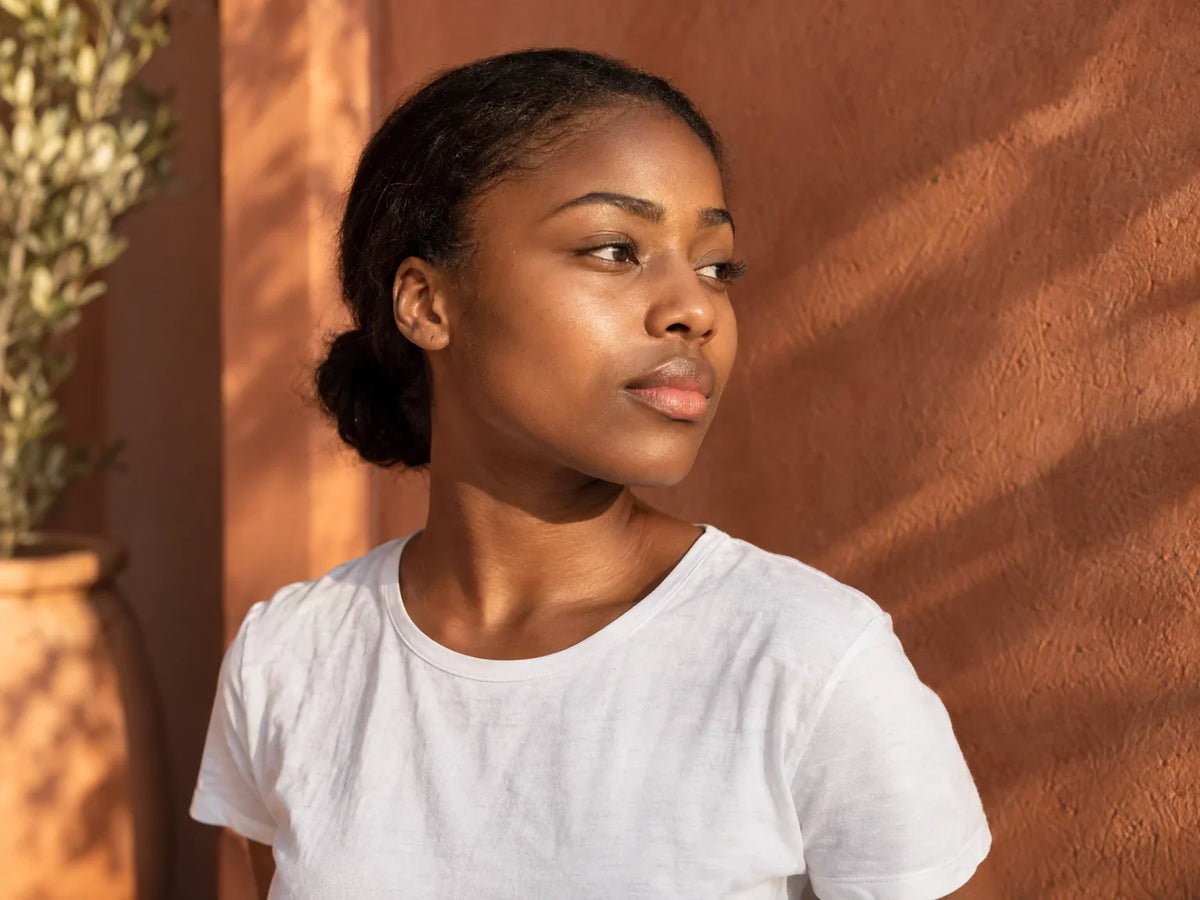
For adults, a spot is mostly an annoyance. For a teenager, it can feel like much more. Puberty is a time when you’re figuring out who you are and how others see you. On top of that, teenagers see photos of people with smooth skin all day, often with filters.
Many teenagers with spots feel self-conscious. They might avoid photos, swimming or sport, or keep their head down. You won’t always notice as a parent, because teenagers don’t necessarily want to talk about it. Phrases like “it’ll go away on its own” or “it’s not that bad” are well meant, but they can make your child feel as though you’re not taking them seriously.
The good news is that you can make a difference. Not by solving the problem for them, but by showing that you see what they’re going through and want to help.
How to start the conversation
How do you bring it up without your child shutting down? Here are a few things that can help:
- Pick a quiet moment. Talking in the car or while you’re cooking can feel easier than discussing it at the table with the whole family.
- Ask a question. For example: “I’ve noticed you’ve been thinking about your skin a lot. Is it bothering you?” That feels different from giving advice.
- Let your child take the lead. Ask whether they want help, and what kind. Some teenagers just want you to buy a few things; others want to work out together what helps.
- Share your own experience. Did you get spots too? Tell your child what it was like for you. It can help them feel less alone.
- Don’t bring it up in front of other people. Not even as a joke, and not even around their grandparents.
What’s better left unsaid
Some things are well meant but don’t land well. Here’s what you could say instead:
- “Are you washing your face properly?” This sounds as though it’s your child’s fault. Try: “Would you like me to get you a gentle cleanser?”
- “Stop touching it!” Saying it once is fine, but try not to keep repeating it. Something practical, like a pimple patch that covers the spot, may help them leave it alone.
- “It’s because of all those crisps.” That usually isn’t true, and it can make your child feel guilty.
- “It’ll go away on its own.” Maybe it will, but that doesn’t help your child right now. Try: “I can see it’s upsetting you. Shall we look at what we can do?”

A simple skincare routine for teenagers
Teenagers see all kinds of skincare advice online, including ten-step routines and expensive products. They don’t need all that, and it may even irritate their skin further. A simple routine is easier to stick to:
- Cleanse once or twice a day with a gentle cleanser and lukewarm water. Don’t scrub.
- Use a light moisturiser after cleansing to keep skin from drying out.
- Apply sunscreen in the morning, even when it’s cloudy.
Help your child stick with it. Keep the products in the same easy-to-see place. Link the routine to brushing their teeth, which they already do twice a day. And don’t nag if they forget once: what matters is what they do over the course of weeks, not one evening.
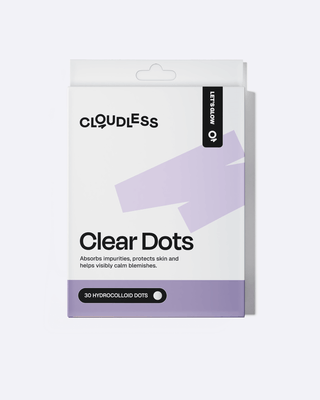
Does your child often pick at spots? A pimple patch may help. It covers the spot, making it harder to touch or scratch. Many teenagers also like that the spot is covered.
Sleep, stress and food during puberty
Puberty can be a busy time. Tests, friends, sport, a part-time job and a phone that stays on late into the night. Sometimes that shows up on the skin. Stress and too little sleep cause the body to produce more stress hormones, which can also stimulate the oil glands.
You don’t have to manage everything, but there are ways you can help:
- Make time for breakfast. Lots of teenagers skip it. Sitting down to breakfast can help with energy and makes space for other daily habits too.
- Help with sleep. For example, suggest charging their phone outside the bedroom at night.
- Keep an eye on busy periods. Blemish-prone skin can be more noticeable during test weeks. It helps if your child knows that.
From within: what skin needs every day
Skincare works on the outside. But skin makes new cells every day, and the nutrients it uses come from food through the bloodstream. The whole body grows quickly during puberty, so it needs plenty of nutrients.
Some of these are particularly important for skin. Zinc contributes to the maintenance of normal skin. Vitamin A is important for skin too. And the body uses vitamin B5 to make and process hormones. You can find these nutrients in foods including meat, fish, dairy, eggs, nuts and wholegrains.
Does your teenager eat a varied diet? If so, they’re already getting a lot of these nutrients. But many parents will recognise this: breakfast gets skipped, lunch is a sandwich from the canteen and the vegetables go untouched. That can make it hard to know whether your child is getting those nutrients every day.
Where Clear+ fits in
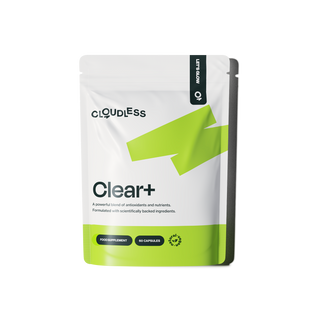
Many parents order Clear+ for their teenager. Clear+ is made for anyone aged 12 and over with blemish-prone skin. Your child takes two capsules with breakfast each day, getting ten ingredients, with zinc, vitamin A and vitamin B5 at the heart of the formula. Clear+ is vegan, made in the Netherlands, and every batch is independently tested by Eurofins.
For teenagers, the best part is how simple it is. Two capsules with breakfast, alongside the three-step routine. Does your child find capsules hard to swallow? Open them and stir the contents into yoghurt or a smoothie. And with a subscription, you can make sure a new pouch arrives when it’s needed.
As a parent, you’ll want to know whether it’s safe. That’s why every amount is listed on the label, so you can see exactly what your child is taking. It contains vitamins, minerals and plant extracts, and every batch is tested for things including heavy metals. Do you already give your child a multivitamin or another supplement containing zinc or vitamin A? Don’t give it alongside Clear+, or check with a pharmacist first. That way, your child won’t get too much of the same nutrients.
Give it time. Skin renews itself over weeks, so check how things are going after around 90 days. For more on why it takes that long, read How long does it take to see a difference in your skin? And if it suits your child, it can simply become part of breakfast: skin needs nutrients every day, just as you brush your teeth every day.
Want to know exactly what’s in it, and why each ingredient is included at that amount? Read What’s in Clear+, and why these amounts?
My son had been looking for something for a while … After trying different products, he found Cloudless. … Easy to use and it works! His confidence has improved a lot.
Patricia S.
When to see a GP
Spots during puberty are normal. But sometimes it’s worth getting help from a GP. Make an appointment if:
- your child has a lot of painful, deep or large spots;
- spots are leaving scars or lasting dark marks;
- the advice hasn’t helped after a few months;
- your child feels low, withdraws or no longer wants to go to school or play sport.
That last point is especially important. How your child feels matters just as much as how their skin looks. A GP can assess what’s going on and what’s right for your child. To learn more about what a GP can do, read Spots during puberty: what’s normal, and when should you see a GP?
More about Clear+
Clear+ at a glance
- Two capsules a day with breakfast, from age 12
- You can also open the capsules and stir the contents into yoghurt
- You manage the subscription: skip or cancel whenever you like
- 90-day satisfaction guarantee on your first order
Frequently asked questions
At what age do children start getting spots?
It usually starts during puberty, often around age 11 or 12 for girls and a little later for boys. Spots are often more severe for boys. For many teenagers, they start to ease after age 20 and have usually cleared up by around 25.
Will chocolate or crisps give my child spots?
According to Thuisarts, spots aren’t caused by particular foods, such as chocolate or chips. Of course, a varied diet is good for the whole body, including the skin.
Can my child squeeze their spots?
It’s better not to. Squeezing often makes a spot bigger and redder, and can leave a small scar. A pimple patch can help your child leave it alone.
When should my teenager see a GP?
If they have a lot of painful or deep spots, spots are leaving scars, the advice hasn’t helped after a few months, or their skin is making them feel low.
What age is Clear+ suitable for?
Clear+ is suitable from age 12. You need to be 18 or over to place an order, so many parents order it for their teenager.
Is Clear+ safe for my child?
Clear+ contains vitamins, minerals and plant extracts, and the amount of each is listed on the label. Every batch is independently tested by Eurofins. Don’t give it alongside another supplement containing zinc or vitamin A, and stick to two capsules a day. If you’re unsure, speak to a GP or pharmacist.
What if my child can’t swallow the capsules?
The capsules are a standard size. If your child can’t swallow them, open them and stir the contents into yoghurt or a smoothie.
What if we’re not happy?
You can get your money back. For your first order, your child needs to take Clear+ every day for 90 days, then you need to contact us within 10 days. Return all the pouches and we’ll refund your purchase price, minus the cost of the return label. You’ll find the full terms in our refund policy.
This article is for general information and isn’t medical advice. If your child is having a lot of trouble with their skin, see a GP. Clear+ is a food supplement. A food supplement is not a substitute for a varied, balanced diet and a healthy lifestyle.
Sources
- Thuisarts.nl (NHG). I have spots (acne). What can I do? thuisarts.nl
- Thuisarts.nl (NHG). I have acne and my GP has prescribed medication. thuisarts.nl
- European Commission. EU Register of nutrition and health claims made on foods. ec.europa.eu
 Excellent on Trustpilot