
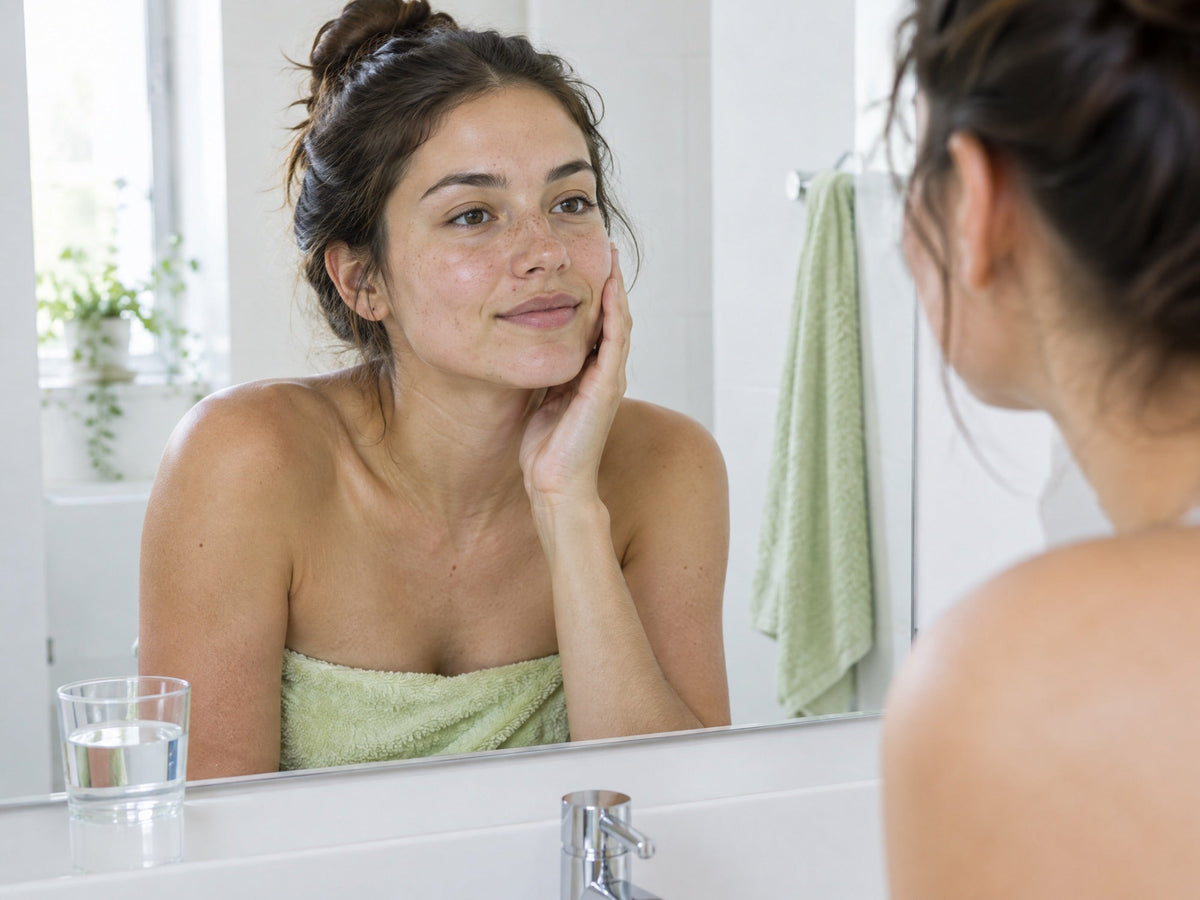
Short answer: a spot forms when a pore gets blocked by oil and skin cells. How much oil your skin produces depends partly on hormones, stress and sleep. Skincare works on the outside; "from within" means your skin gets nutrients such as zinc and vitamin A from the food you eat, through your bloodstream.
You’ve got a new cleanser, a new serum, and you’re really trying. But another spot appears anyway, usually at the worst possible moment. In this article, we explain in plain English what’s happening in your skin, why you’re more prone to spots at certain times, and what "from within" actually means.
At a glance
- A spot starts when oil and skin cells block a pore.
- Hormones, stress, sleep and diet all play a part in how your skin behaves.
- Skincare works on the outside. Your skin gets its nutrients through your bloodstream, including from what you eat.
- Zinc and vitamin A are important for normal skin.
- Your skin renews itself over weeks, not days. Give a new routine time.
How a spot forms
Every spot starts small, in a pore. A pore is a tiny opening in your skin, with a hair follicle and an oil gland underneath. That gland produces sebum: an oily substance that helps keep your skin supple and protected. Normally, sebum flows out through the pore. A spot forms when it can’t. It usually happens in four steps:

- More oil is produced. Your oil glands sometimes produce more sebum than usual. You might notice your skin getting shiny more quickly.
- Skin cells stick together. Your skin is constantly shedding old cells. Sometimes they stick to each other and to the sebum instead of coming away.
- The pore gets blocked. Sebum and skin cells form a plug. If the pore stays open, you see a blackhead. If it closes, you see a small white bump.
- It gets red and tender. Bacteria are always present on your skin, and some thrive in a closed pore full of sebum. Your body responds, making the spot red, swollen and tender.
This process usually takes a few weeks. So the spot you see today has been developing for a while. That also explains why you won’t see a difference straight away when you change your routine.
Blackheads, white bumps and red spots: what’s the difference?
Not all spots are the same. It depends on how far along the process is and how deep the spot sits.
- Blackhead. A blocked pore that stays open. The plug is exposed to air and turns dark. It isn’t dirt, even if it looks like it.
- White bump. A blocked pore that’s closed. You see a small white or skin-coloured bump without redness around it.
- Red spot. A blocked pore your body is reacting to. It becomes red and tender, sometimes with a white tip.
- Deep spot. A larger, painful bump under the skin, without a visible tip. It sits deeper and often lasts longer. If you get a lot of these, see your GP.
Why you get more spots at certain times
Everyone produces sebum and sheds skin cells. Spots are very common: according to Thuisarts, the public information website run by Dutch GPs, almost all teenagers get them during puberty, and many adults continue to get them too. Several things can affect why some people get more spots than others.
Hormones
Hormones are messengers in your body. Some tell your oil glands to produce more sebum. That’s why many people notice a difference during puberty, around their period, after coming off the pill or around menopause. Men are affected too: their hormones are different, but they also influence the oil glands.
Stress and sleep
When you’re stressed or sleeping badly, your body produces more stress hormones. Lots of people notice more breakouts during busy weeks. Stress isn’t the only cause, but it often plays a part.
Diet
There’s a lot of talk about diet and skin, and not all of it is accurate. What researchers do see is that some people notice a difference when they eat fewer quickly absorbed sugars or have less dairy. For others, it makes little difference. There’s no one dietary change that works the same way for everyone. But your skin does use nutrients from your food. More on that in a moment.
Touching and squeezing
Touching your face often, holding your phone against your cheek or squeezing a spot might seem harmless, but it can make the spot bigger and redder. Squeezing can also leave a mark or small scar that stays visible longer than the spot itself.
What skincare can and can’t do
Skincare works on the outside of your skin, and that matters. A gentle cleanser removes oil, dirt and make-up. A light moisturiser keeps your skin supple. And sunscreen protects your skin from UV light, so marks left by spots are less likely to darken.
What skincare can’t do is change how much sebum your glands produce from within, or which nutrients your body sends to your skin. That’s why you can try product after product and still have blemish-prone skin. It isn’t one or the other: caring for your skin on the outside and supporting it from within can go together.
A few simple skincare tips:
- Keep it simple: a gentle cleanser, a light moisturiser and sunscreen. More isn’t always better.
- Don’t wash your face too often or scrub too hard. Skin that dries out may produce more oil.
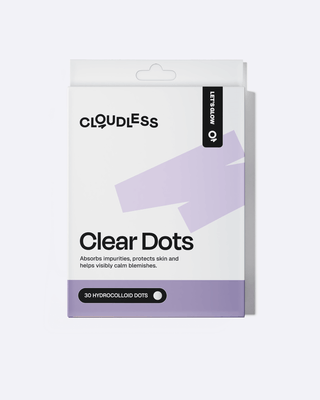
- Leave spots alone. A pimple patch can help you avoid picking at them.
- Change your pillowcase regularly and clean your phone screen now and then.
What "from within" means
Your skin is an organ, just like your heart or liver. It gets what it needs through your bloodstream: oxygen, water, and vitamins and minerals from your food. Cells in the lower layers of your skin use these nutrients to make new skin cells. Over a few weeks, those cells move upwards until you see them at the surface.
That’s what we mean by "from within": what you take in provides the building blocks for what you see on the outside. A few nutrients are particularly important:
- Zinc contributes to the maintenance of normal skin. You’ll find it in meat, fish, dairy, nuts and wholegrains.
- Vitamin A is also important for normal skin. You may know it from carrots and green vegetables, which contain beta-carotene: a substance your body converts into vitamin A.
- Vitamin C is needed by your body to make collagen, a protein that gives your skin firmness. It’s found in fruit and vegetables.
- Vitamin B5 is used by your body to make certain hormones. Small amounts are found in almost everything you eat.
If you eat a varied diet with plenty of vegetables, fruit, wholegrains and protein, you’ll already get many of these nutrients. The tricky part? Your skin needs them every day, not just on the days you eat well. And if you try to buy zinc, vitamin A and vitamin B5 separately, you can soon end up with five bottles in your kitchen.
A supplement can make that easier by giving you the same amount each day, even when your diet is less varied. Further down, we’ll explain how we’ve done that with Clear+.
"Your skin renews itself over weeks, not days. What you do today won’t show up straight away."
A routine you can stick to
The best routine is one you follow every day. A few things that can help:
- Give it time. Assess a new routine after 2 to 3 months, not a week. Your skin renews itself in cycles that take several weeks.
- Don’t change everything at once. If you change five things at the same time, you won’t know what’s helping and what isn’t.
- Take a photo in the same light. It’s hard to spot changes from one day to the next. A photo at the start and another a few months later, in the same place and lighting, gives you a clearer picture than the mirror.
- Pay attention to sleep and stress. It sounds boring, but a few weeks of better sleep often makes more difference than a new product.
- Make it part of an existing habit. Take a supplement with breakfast, for example, and keep it somewhere you’ll see it.
When to see your GP
An occasional spot is completely normal. But see your GP if:
- you have lots of painful, deep or large spots;
- spots leave scars or lasting dark marks;
- your skin suddenly reacts very differently from usual;
- it’s having a significant effect on your daily life or how you feel.
A GP or dermatologist can help work out what’s going on and what’s right for you.
Where Clear+ fits in
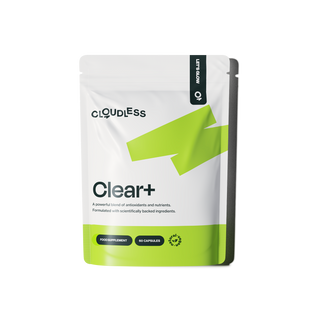
Clear+ is our supplement for blemish-prone skin. It makes "from within" as simple as possible: ten ingredients, including zinc, vitamin A and vitamin B5, in two capsules a day. Take them with breakfast and get on with your day. Your cleanser and sunscreen stay in your routine: they care for the outside, while Clear+ provides nutrients from within. Already taking a multivitamin or another supplement containing zinc? Don’t take it alongside Clear+.
When we created Clear+, we thought about the doubts many people have about supplements:
- "I’ll only forget to take all those separate bottles." That’s why everything is in one product, taken at the same time each day.
- "I never know what’s actually in it." Every amount is listed on the label. Nothing is hidden in a "blend".
- "But is it pure?" Every batch is made in the Netherlands and independently tested by Eurofins.
- "What if it isn’t for me?" Your first order comes with a 90-day satisfaction guarantee. If you’re not happy, you get your money back.
I’ve honestly tried pretty much everything you can find online. … Then I came across Cloudless on Instagram and it made me want to try tackling it from within for once. … Honestly didn’t expect this.
Lars B.
Want to know exactly what’s in it, and why we chose those amounts? Read what’s in Clear+.
More about Clear+
Clear+ at a glance
- Ten ingredients in two capsules a day, including zinc, vitamin A and B5
- Vegan and made in the Netherlands
- More than 34,289 customers have tried it before you
- 90-day satisfaction guarantee on your first order
Frequently asked questions
Does drinking lots of water help with spots?
Drinking enough is good for your whole body, including your skin. But drinking extra water won’t solve spots. Just drink enough that you don’t feel thirsty.
Is dairy bad for your skin?
Not for everyone. Some people notice clearer skin when they drink less milk; others see no difference. If you want to try it, cut back on dairy for a few weeks and see what happens. Just make sure you’re getting enough calcium.
Does squeezing spots help?
It’s best not to. Squeezing often pushes what’s inside deeper into the skin, making the spot bigger or leaving a dark mark. Leave it alone, or use a pimple patch to stop yourself picking at it.
Why do I get more spots around my period?
Your hormones change in the days before your period. For many women, their oil glands produce more sebum at this time, so pores get blocked more easily. That’s why many women notice more spots around their chin and jawline then. Read more in Hormonal spots: how your hormones affect your skin.
Do men get spots too?
Yes. Men often produce more sebum than women, and their hormones influence their oil glands too. Shaving can make skin more sensitive. A sharp razor and a gentle shaving gel can help.
How long will it take to see a difference?
Because your skin renews itself over weeks, you’ll usually only notice changes after a few weeks to months. Give a new routine at least 2 to 3 months. To find out why it takes that long, read How long does it take to see a difference in your skin?
This article is for general information and isn’t medical advice. If your skin is causing you significant problems, see your GP. Clear+ is a supplement. A supplement isn’t a substitute for a varied, balanced diet and a healthy lifestyle.
Sources
- Thuisarts.nl (NHG). I have acne. thuisarts.nl
- Huidfonds. Acne. huidfonds.nl
- European Commission. EU Register of nutrition and health claims made on foods. ec.europa.eu
- Voedingscentrum. Vitamins and minerals. voedingscentrum.nl

 Excellent on Trustpilot